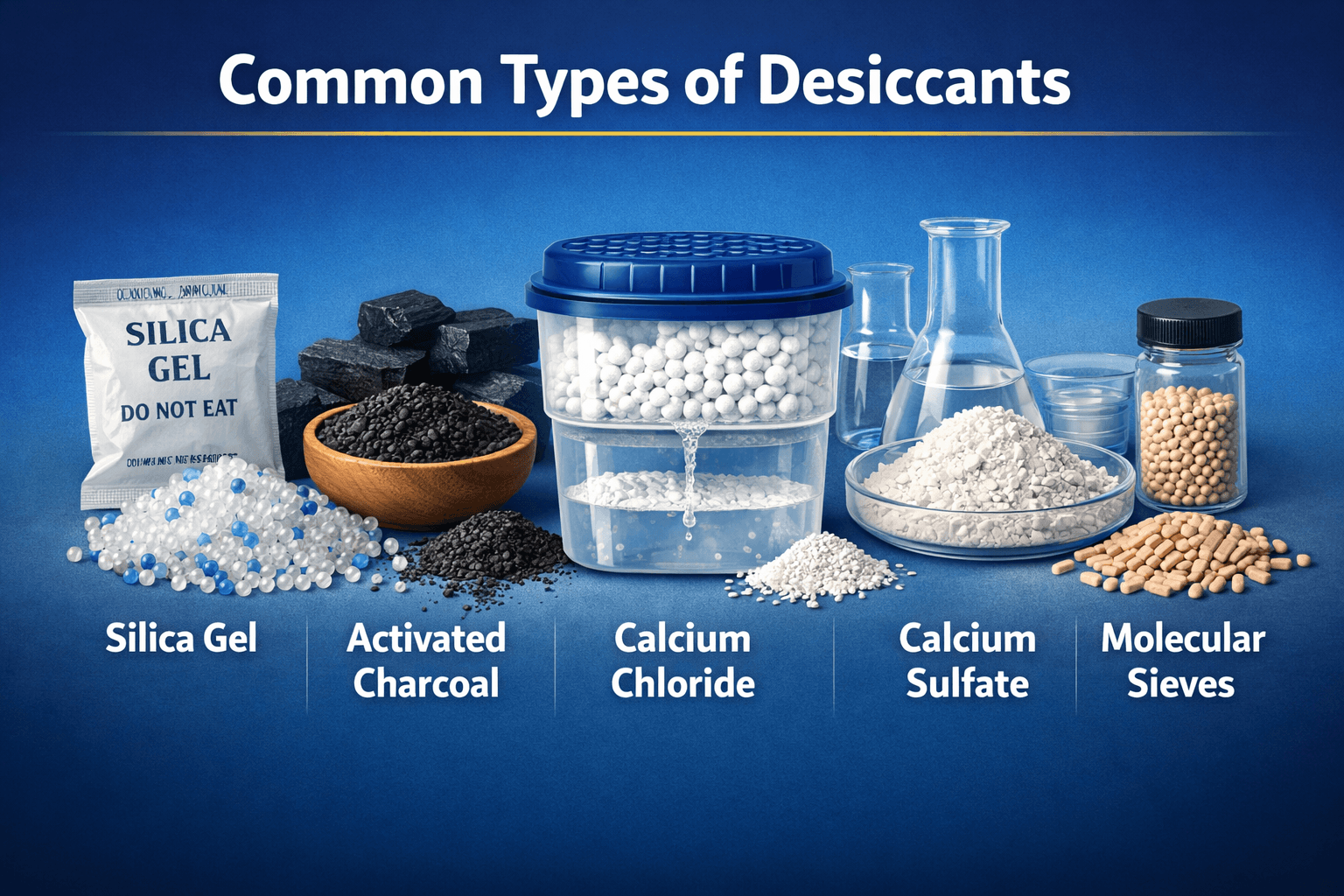
Common Types of Desiccants
Desiccants are materials that remove or control moisture from the surrounding environment. They work by attracting and retaining water vapor, which helps maintain a dry condition and prevents moisture-related damage. Different desiccant materials have distinct physical and chemical properties. Because of this, certain types are better suited for specific applications such as packaging, industrial drying, laboratory use, or humidity control in storage environments. Below are several of the most commonly…
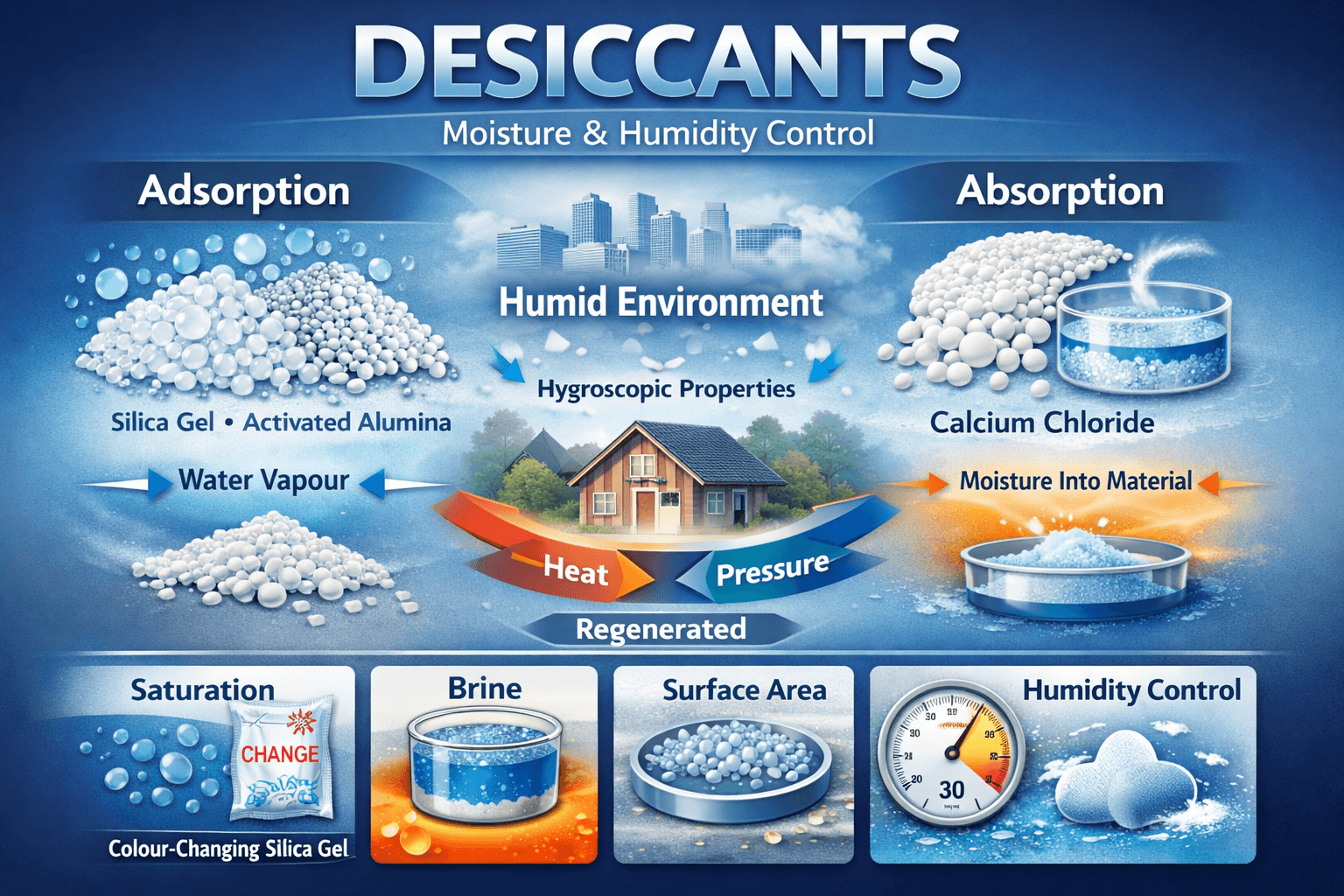
How Desiccants Work
Desiccants are materials that remove moisture from their surrounding environment to maintain a dry and stable atmosphere. They function by exploiting the difference in humidity between the air and the desiccant itself. When exposed to a humid environment, water vapour naturally moves toward the desiccant due to its hygroscopic properties. This process continues until either the desiccant becomes saturated or humidity equilibrium is reached. Adsorption vs. Absorption Desiccants remove moisture…
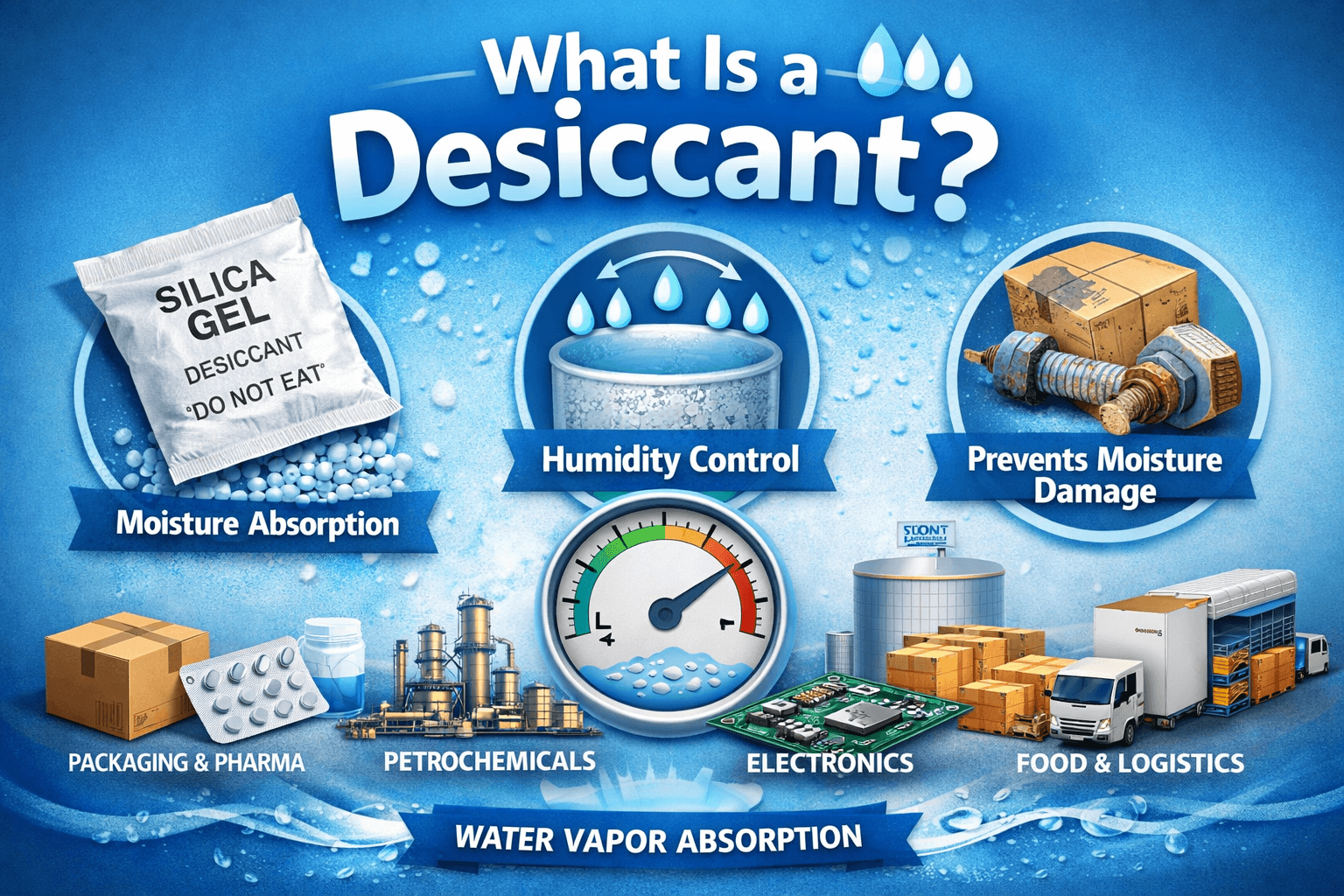
What is a desiccant?
A desiccant is a hygroscopic substance that absorbs or removes moisture from the surrounding environment in order to maintain a dry condition. Hygroscopic materials attract and hold water molecules from the air or other substances, which allows desiccants to reduce humidity and prevent moisture-related damage. Desiccants are essentially the opposite of humectants, which retain moisture. In most practical uses, desiccants are solid materials placed in packaging, containers, or industrial systems…